- UK tax residence ends only when you pass the Statutory Residence Test as non-resident. Leaving the country or deregistering is not enough on its own.
- Split-year treatment can make you non-resident from the day you leave, for example when you start full-time work abroad.
- Coming back within five years can bring certain gains and income back into UK tax under the temporary non-residence rules.
- Inheritance tax is residence based since April 2025: long-term UK residents stay within its scope for several years after leaving.
- The visa route most British entrepreneurs take is their own UAE company, which takes around two weeks.
Why Brits move to Dubai
Around a quarter of a million British nationals live in the UAE, which makes them one of the largest Western communities in Dubai. The reasons are easy to see: no personal income tax, a safe and clean city, year-round sun and a time difference of only three to four hours to London. English is the working language in business, and there are several daily direct flights to London and other UK airports.
For higher earners the tax difference is the main driver. In the UK, income above £125,140 is taxed at 45 %, plus National Insurance. In Dubai, personal income, dividends and capital gains are not taxed. Dubai also has downsides, from summer heat to high rents, see the disadvantages of moving to Dubai.
Leaving UK tax residence
Whether you are UK tax resident is decided by the Statutory Residence Test (SRT), not by where you are registered. The test runs through three stages: automatic overseas tests, automatic UK tests and the sufficient ties test.
The automatic overseas tests
- You spend fewer than 16 days in the UK in the tax year and were UK resident in one or more of the previous three tax years.
- You spend fewer than 46 days in the UK and were not UK resident in any of the previous three tax years.
- You work full time abroad (on average 35 hours a week), spend fewer than 91 days in the UK and work in the UK on no more than 30 days.
If none of these apply, the sufficient ties test counts your UK ties (family, accommodation, work, time spent in the UK in previous years) against the days you spend in the UK. The more ties you keep, the fewer days you can spend there without becoming resident again. A home that stays available to you in the UK is one of the most common reasons plans fail.
Split-year treatment
Normally residence applies to the whole tax year (6 April to 5 April). Split-year treatment divides the year into a UK part and an overseas part, for example when you leave to work full time abroad or to join a partner who works abroad. Tell HMRC with form P85 that you are leaving, and claim split-year treatment in your Self Assessment return.
The five-year rule
If you return to the UK within five years, the temporary non-residence rules can tax certain income and gains you realised while abroad, for example gains on assets you already owned before leaving and some dividends from close companies. Anyone planning to sell a business or large shareholding after leaving should plan with this rule in mind.
Inheritance tax after the non-dom reform
Since 6 April 2025 the old domicile rules no longer decide inheritance tax. Instead, inheritance tax follows long-term residence: if you were UK resident for at least 10 of the last 20 tax years, your worldwide assets stay within the scope of UK inheritance tax for a period after you leave. Depending on how long you lived in the UK, this "tail" runs for between three and ten years.
For most British families this is the point that needs the most planning: leaving the UK ends income tax on foreign income relatively quickly, but inheritance tax on worldwide assets can follow you for years.
UK property, pensions and National Insurance
- Letting your UK home: rental income stays taxable in the UK. Register for the Non-Resident Landlord Scheme, otherwise your letting agent or tenant must deduct basic rate tax. Gains on UK property are also taxable for non-residents.
- Pensions and ISAs: your UK pensions and ISAs can stay where they are. You cannot pay into an ISA while non-resident, and pension withdrawals remain taxable in the UK unless the double tax treaty says otherwise.
- State pension: voluntary National Insurance contributions can protect your state pension. The rules for paying from abroad were tightened from April 2026, so check your record and eligibility on gov.uk before you leave.
The UK and the UAE have a double taxation convention. It decides where you are resident if both countries could claim you, and it can reduce UK tax on some income that still arises in the UK.
Your UK company
If you run a UK limited company, moving yourself to Dubai does not automatically move the company. A UK company stays UK resident for tax, and managing it from Dubai raises questions about where it is effectively managed and whether it has a taxable presence in the UAE. Many clients keep the UK company for existing UK business and set up a UAE company for new business.
The route to a UAE residence visa
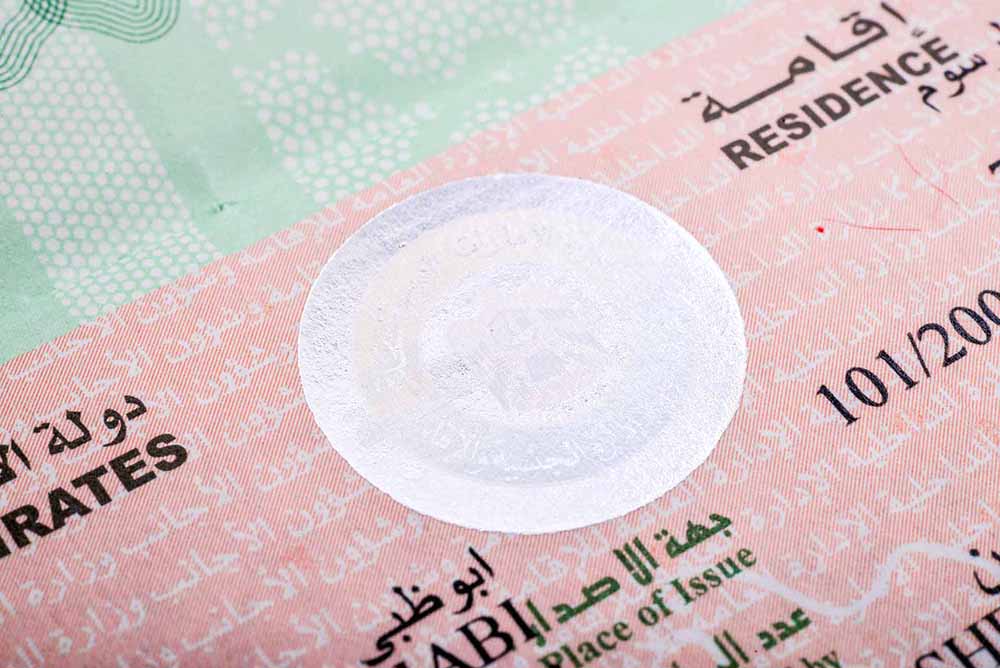
Most of our clients move with their own company. You set up a company in a Freezone or on the mainland, the company sponsors your residence visa, and you receive your Emirates ID. The whole process usually takes around two weeks, of which you only need to be in Dubai for two to three days: entry, medical test and biometrics.
- Company formation: the most common route for entrepreneurs and freelancers. Which licence and which zone fit depends on your activity, see how to start a business in Dubai and Mainland vs Freezone.
- Golden Visa: a ten-year residence permit, for example when you buy property worth at least AED 2 million, see Golden Visa Dubai.
- Employment: if a UAE employer hires you, the employer sponsors your visa.
For the UAE to confirm you as tax resident (the Tax Residency Certificate you may need towards your home country), you generally need to spend 183 days a year in the UAE, or 90 days if you also hold a UAE residence visa and have a permanent home or job there. Personal income is not taxed in the UAE; companies pay 9 % corporate tax on profits above AED 375,000, and qualifying Freezone income can be taxed at 0 %, see taxes in Dubai.

Moving from the UK?
Book a free 20-minute initial consultation with Clemens Kohlbacher, Senior Consultant, and get an honest assessment of whether and how Dubai fits you.
Book nowPractical steps for Brits
- Driving licence: a full UK licence can be exchanged for a Dubai licence without a test, see driving licence in Dubai.
- Health insurance is mandatory in Dubai; the NHS no longer covers you once you live abroad, see health insurance in Dubai.
- Banking: keep one UK account and tell the bank you are moving; open a UAE account once you have your Emirates ID, see opening a bank account in Dubai.
- Housing and schools: see where to live in Dubai and schools in Dubai.
Checklist
- Check which SRT test you will meet in the year you leave and the following years.
- Plan inheritance tax and any large disposals before leaving, with the five-year rule in mind.
- Choose your visa route and set up your UAE company.
- Send form P85 to HMRC and arrange your UK property and National Insurance.
- Move, complete medical test and biometrics, open your UAE bank account.
Frequently asked questions
Do I pay UK tax if I move to Dubai?
Once you are non-resident under the Statutory Residence Test, you pay UK tax only on UK income such as UK rent. Your salary or profits earned in Dubai and your foreign investment income are then no longer taxed in the UK, provided you do not return within five years with gains covered by the temporary non-residence rules.
How many days can I spend in the UK after moving to Dubai?
It depends on your ties to the UK. If you work full time abroad, you can spend up to 90 days in the UK. Without full-time work abroad, the sufficient ties test applies: if you were UK resident before and keep four UK ties, as few as 16 days can make you resident again.
Is there a UK exit tax?
There is no general exit tax for individuals. The temporary non-residence rules and inheritance tax, which can apply for several years after leaving, are the points that need planning.
Can I keep my UK bank account?
Yes, but tell the bank that you are moving. Some UK banks restrict accounts for non-residents, so keep one account that works abroad and open a UAE account after you receive your Emirates ID.
Summary
For Brits, moving to Dubai is mainly a question of timing and ties: leave in a way that passes the Statutory Residence Test, use split-year treatment, keep the five-year rule and the inheritance tax tail in mind, and choose the visa route that fits your income. With your own UAE company, the residence visa takes about two weeks.
For the general process, costs and the pros and cons, see our main guide moving to Dubai. Tax rules change often and depend on your personal situation: treat this guide as an overview and get individual advice before you leave. We are happy to help in a free initial consultation.
Thinking about moving to Dubai?
Get our free Dubai relocation guide now: 7 tips on moving, company formation, visas & more.

You might also like