When you move to Dubai as a family, one question comes up straight away: which schools are there in Dubai, and which international school is the best one for my children?
The school system in Dubai works quite differently from the one in Europe, although there are exceptions. Here is a comprehensive guide to schools in Dubai, from the curricula to the fees.
- The choice of international schools in Dubai is large. Costs, location and curricula as well as extracurricular activities are among the deciding factors.
- The costs at the good schools usually start at 4,000 AED per month (1,000 EUR).
- The best schools include, among others, Swiss International Scientific School, GEMS Wellington, Dubai American Academy and Dubai International Academy.
- The authority publishes an official ranking of the schools, and it is called the KHDA.
The school system in Dubai
Anyone arriving from Europe first has to let go of something they take for granted: there are no free state schools for expats. The public schools are there for Emirati nationals, teach in Arabic and admit foreigners only in exceptional cases and for a fee. Practically every child who moves here therefore attends a private school, and Dubai has more than 220 of them with over 370,000 pupils.
The KHDA and its ratings
Oversight lies with the Knowledge and Human Development Authority (KHDA). It licenses the schools, approves their fees and inspects every school regularly. The result of that inspection is the rating you will come across everywhere:
- Outstanding: the top group, currently 23 schools in Dubai
- Very Good: consistently strong schools, the right choice for most families
- Good: solid, and where the majority of schools sit
- Acceptable and Weak: schools operating under conditions, where a closer look is called for
The rating is a good first filter, but it is no verdict on the fit. A «Very Good» school ten minutes from home can be better for your child than an «Outstanding» one with an hour's commute.
The curricula
Dubai teaches more than a dozen curricula. Four of them are relevant for most expat families:
| Curriculum | Qualification | Suits |
|---|---|---|
| Britishthe most widespread in Dubai | IGCSE, A-Levels | anyone staying international or heading for the UK |
| IBInternational Baccalaureate | IB Diploma | recognised worldwide, including as a university entrance qualification in Europe |
| American | High School Diploma, AP | anyone planning a move towards the USA |
| Germanonly one school in Dubai | Abitur under the Thuringian curriculum | anyone keeping a return to Germany open |
The school year runs from the end of August to the beginning of July, with long holidays in summer and shorter ones around New Year and in spring. Lessons usually end between 2 and 3 pm, followed by the optional afternoon activities (CCA).
Sources: khda.gov.ae, Khaleej Times on the 2026/27 fee freeze, fee schedules of the schools
Choosing a school: the decisive factors
If you are looking for a suitable school for your child or children, it pays to look into it and think it through in advance. Besides the rankings there are other factors that can and should shape the choice of school.
- Location: A factor that is often neglected is the location of the school. People assume that living in the same city as the school settles the matter. But you will find that Dubai is big and the traffic is bigger. A school run can take more than an hour, twice a day. Home and school location should therefore be chosen deliberately.
- Costs: Schools in Dubai are pretty much all private, which is why you have to pay for them. The exact costs vary from school to school and with the services you use. But you can expect several hundred euros a month in primary school, and more than a thousand euros a month after that.
- Languages: Depending on which language you speak yourself and which languages you want your child to learn, this should feed into the decision as well. Some schools are strongly international, while others have a clear language focus.
- Facilities: A school is not just a place to learn, but also a place where children develop in other areas such as sport. It is therefore important to look at the whole offering.
KHDA rating: The government of Dubai runs its own body that assesses the schools every year and compiles a ranking. The Knowledge and Human Development Authority, KHDA for short, rates schools on the following factors:
- Pupils' achievements and awards
- Quality of teaching and learning
- Curriculum quality and resources
- School environment and safety
- Leadership and management
- Personal and social development of the children
The best schools in Dubai
There are numerous schools in Dubai. Some are public, but most are private. Here is an overview of the best international schools for expats in Dubai. The order is not a strict ranking.
GEMS Wellington International School
One of the schools mentioned again and again is GEMS Wellington. It is currently rated Outstanding in the KHDA ranking and is one of the most respected schools in Dubai. GEMS offers a British curriculum from year 1 to year 13.
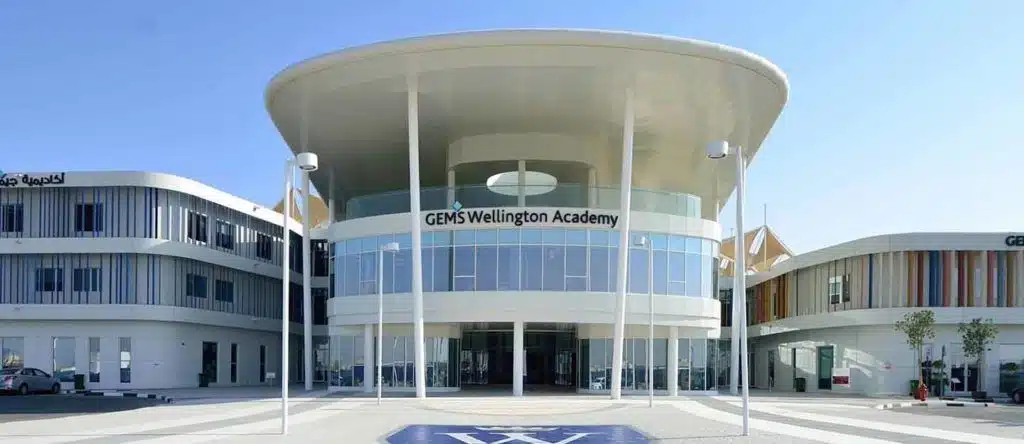
The school offers a large campus with numerous sports facilities such as tennis, football, basketball, swimming and much more. It is also one of the largest schools in Dubai.
In total, GEMS Wellington also offers more than 90 clubs, which lets pupils develop individually in a range of areas.
The costs are high by comparison. Depending on age, they range from 10,000 to 25,000 EUR per year.
School website: wellingtoninternationalschool.com
Dubai American Academy
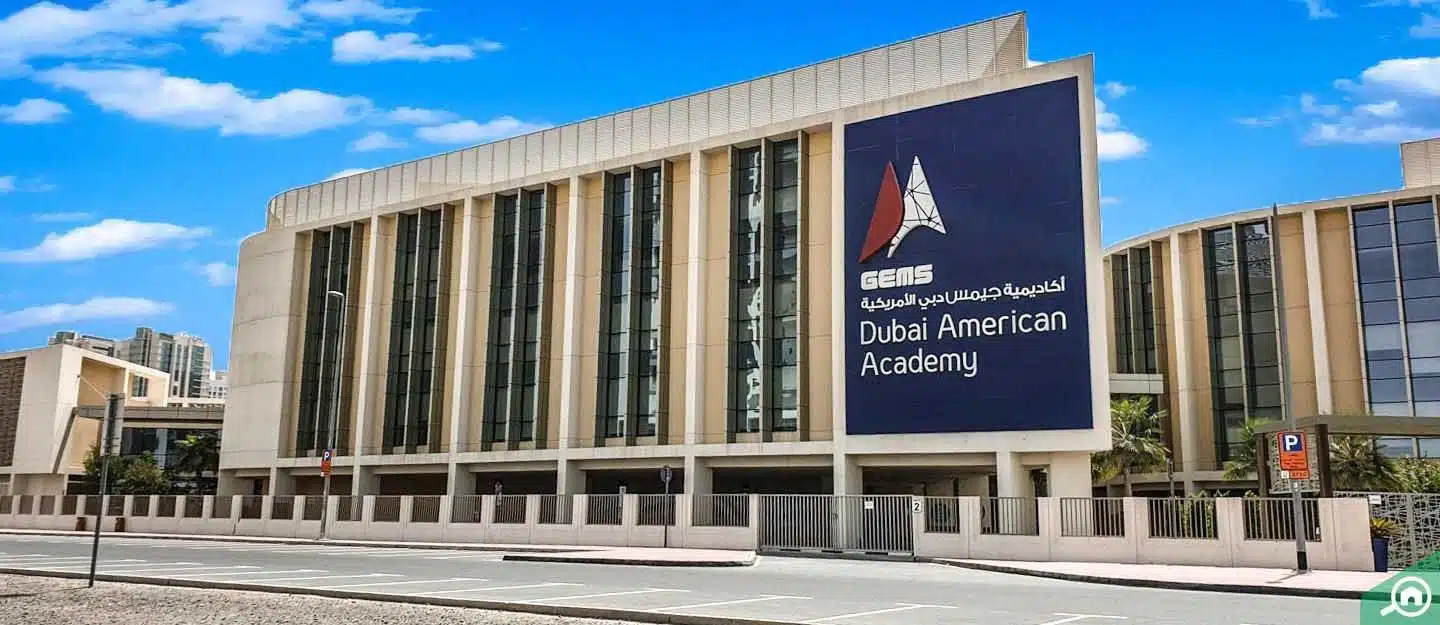
The American counterpart to GEMS is the Dubai American Academy. This school follows the American system and takes children up to the High School Diploma and the IB. Here too the KHDA has awarded an «Outstanding» rating.
The school stands out for a high standard of education with a focus on science subjects such as mathematics, physics, chemistry and engineering. It has also been recognised repeatedly for inclusion and pupil wellbeing.
The campus again has a lot to offer and the sports facilities are very varied. That costs accordingly, as the annual fee is 70,000 to 90,000 AED.
School website: gemsaa-dubai.com
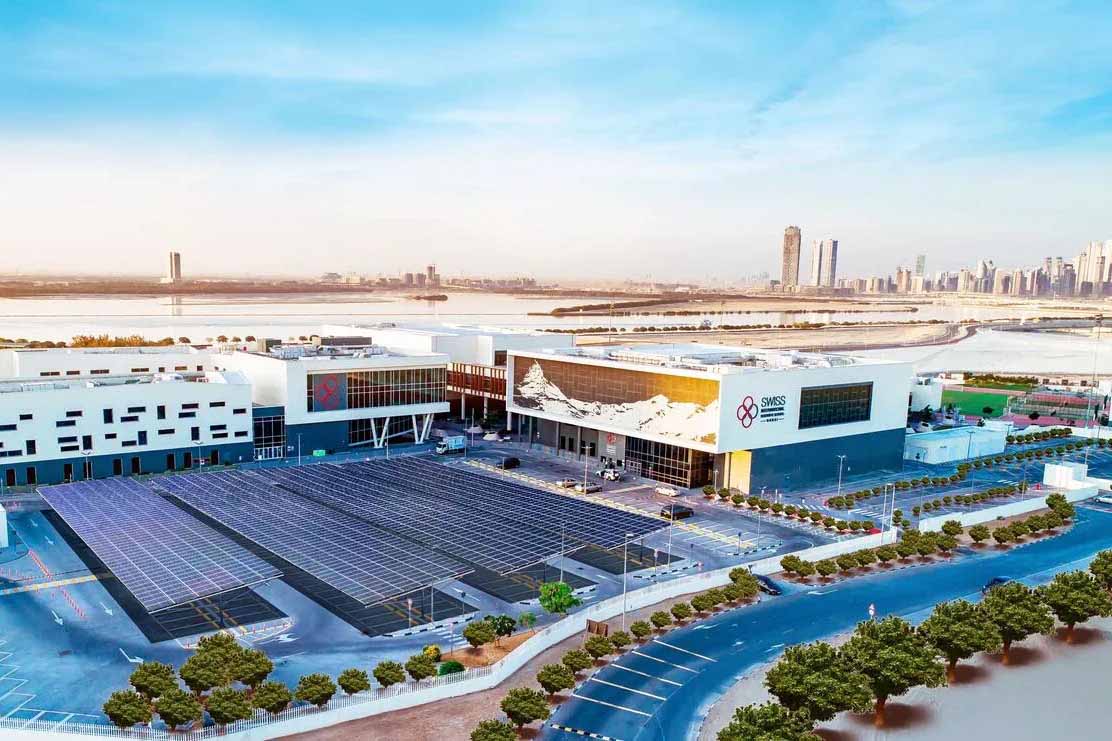
Swiss International Scientific School in Dubai (SISD)
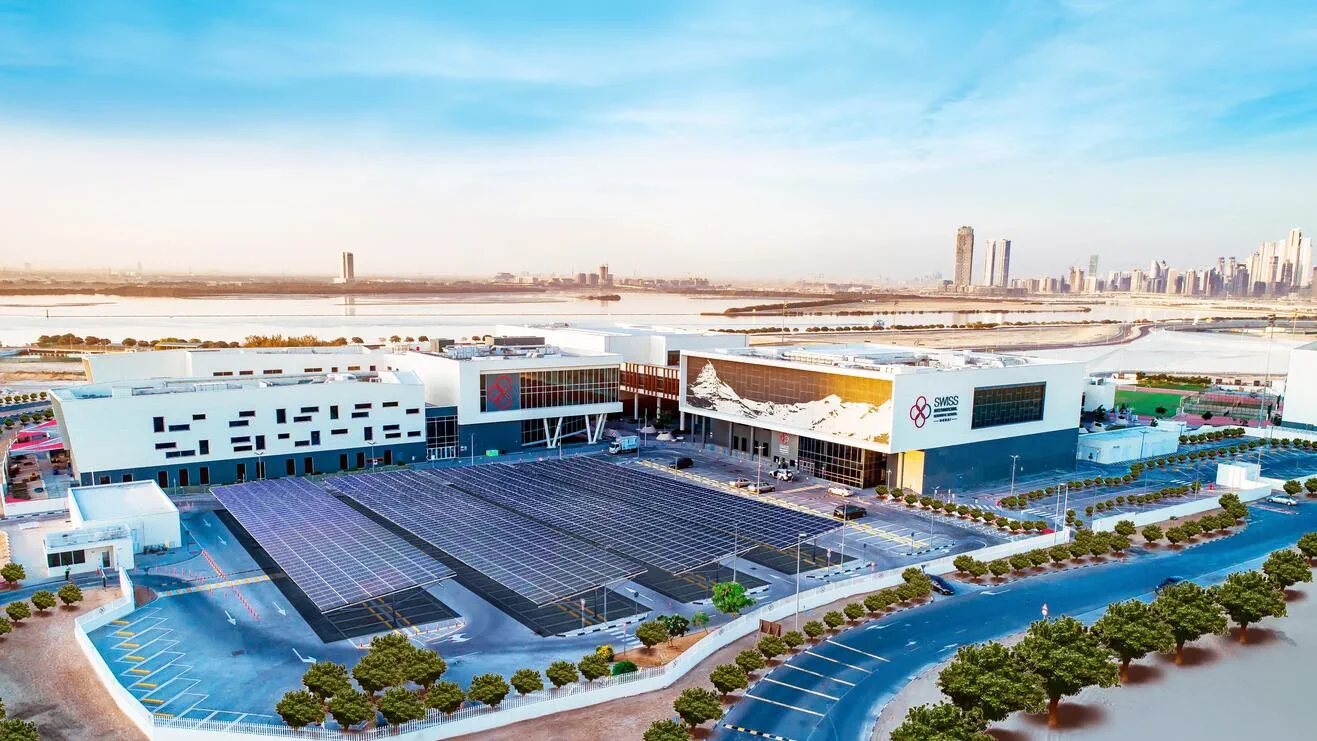
The Swiss International School Dubai, SISD for short, is another excellent school, offering education in Dubai from age 3 to 18. You can choose between a day school and a full boarding format.
As the name suggests, the Swiss school system is combined with the Arabic one here. Lessons are taught in English, German and French, with Arabic as a compulsory subject.
The focus here too is on natural sciences, technology and innovation, but also entrepreneurship.
Alongside excellent Swiss schooling you also get great facilities for sport and leisure. These include tennis courts, an Olympic swimming pool, a football pitch with real grass and much more.
The costs typically range from 62,900 to 118,400 AED for the day school, depending on the year group.
For boarding, on the other hand, you pay 201,897 to 259,100 AED per year.
School website: nordangliaeducation.com/sisd-dubai
Dubai International Academy

Another excellent school is the Dubai International Academy. It sits in the exclusive Emirates Hills district and offers an IB programme. According to the KHDA rating, the school has consistently been rated «Outstanding» in recent years.
Tuition fees range from 40,000 to 80,000 AED per year, depending on the year group.
School website: diadubai.com
Deutsche Internationale Schule Dubai (DISD)

The Deutsche Internationale Schule is the only school in Dubai taught entirely in German. The language of instruction is German, with English, French and Arabic as second languages. Teaching follows the Thuringian curriculum and is internationally recognised. The KHDA rates the school «Very Good».
As the name says, the school is aimed primarily at German-speaking children. It is correspondingly smaller than the others, about a third of their size, with around 950 pupils.
The school focuses on STEM: mathematics, computer science, natural sciences and technology. Modern labs, IT infrastructure and further facilities support this.
Here too there is a broad programme that goes beyond academic performance. Sport, art and music are all encouraged.
School fees here range from 38,760 AED (pre-kindergarten) to 73,227 AED (years 11 to 12).
School website: germanschool.ae
More schools at a glance
Beyond the five described in detail, the same names keep appearing on the shortlists of expat families. Here are the most sought-after, with curriculum, KHDA rating and annual fee:
| School | Curriculum | KHDA | Annual fee (AED) |
|---|---|---|---|
| Dubai CollegeAl Sufouh | British | Outstanding | 97,400 – 110,300 |
| Dubai British School Jumeirah Park | British | Outstanding | 65,700 – 111,800 |
| Kings' School Al Barsha | British | Outstanding | 58,000 – 105,900 |
| Jumeirah Collegefrom Year 7 | British | Outstanding | 78,500 – 98,700 |
| Repton Dubaiboarding available | British, IB | Outstanding | 52,900 – 95,000 |
| Royal Grammar School Guildford Dubai | British | Very Good | approx. 55,000 – 85,000 |
| Nord Anglia International School | British, IB | Outstanding | 80,000 – 120,000 |
| Jumeirah English Speaking School (JESS) | British, IB | Outstanding | approx. 55,000 – 100,000 |
| GEMS Modern Academy | Indian, IB | Outstanding | 38,200 – 73,900 |
| Dubai English Speaking SchoolPrimary school | British | Outstanding | 43,100 – 53,300 |
| Lycée Français Georges Pompidou | French | Outstanding | 29,500 – 62,400 |
Annual fees for 2025/26 to 2026/27, staggered from pre-school to sixth form; the lower figure applies to the youngest year groups. For 2026/27 Dubai has suspended any fee increase, so the rates stay stable. What is binding is always the fee schedule of the individual school, approved by the KHDA.
Costs
The costs of the schools vary, but for very good schools you generally have to budget between 1,000 and 2,000 EUR per month. More, of course, in the case of boarding. In return these are high-quality private schools with international standards and awards, which cannot be compared with ordinary state schools.
- Free state schools do not exist for expats. Anyone moving to Dubai sends their child to a private school, and there are more than 220 of them.
- Fees range from around 13,000 to 112,000 AED per year, that is roughly 3,200 to 28,000 EUR. The bulk of the schools popular with expats sit between 40,000 and 90,000 AED.
- For the school year 2026/27 fees are frozen: Dubai has suspended an increase by decree.
- On top of the annual fee come application, admission fee, uniform, bus and iPad , together easily another 10 to 15 %.
What comes on top of the school fee
The annual fee is only the largest item, not the only one. Budget another 10 to 15 %:
| Item | Costs | Note |
|---|---|---|
| Application fee | 500 – 1,000 AED | one-off per child, non-refundable |
| Admission fee | approx. 10 % of the annual fee | credited against the first invoice |
| Re-enrolment | approx. 5 % of the annual fee | every spring, credited against the fee |
| School bus | 3,000 – 7,000 AED / year | depending on distance, often the underestimated item |
| Uniform | 500 – 1,500 AED / year | compulsory from year 1 |
| iPad or laptop | from 2,000 AED | required at many schools from year 1 |
| Canteen, trips, after-school activities | 2,000 – 6,000 AED / year | optional, but used by most in practice |
Indicative figures, as of September 2026. The annual fee is usually paid in three instalments at the start of each term; some schools grant a discount for paying in advance or for siblings. What the rest of life in Dubai costs is covered in the article Cost of living in Dubai.
Admission: deadlines, waiting lists, entrance test
The process is similar everywhere: online application, application fee, placement test or interview, offer of a place, admission fee. At the sought-after schools, weeks to months pass between application and offer.
Lead time is what matters. The main admission round runs from October to February for the school year starting in August. If you move mid-year you will usually still find a place, just not necessarily at the school you wanted: at the «Outstanding» schools, waiting lists of one to two years are normal in popular year groups. Siblings get priority.
For the application you need the child's passport and visa, the Emirates ID (or the pending application), birth certificate, vaccination record, passport photos and the reports from the last two years. Some schools ask for reports issued abroad in a certified English translation; that can be dealt with before the move and saves weeks afterwards.
Experience
In our experience, schooling and the choice of school always have to be decided individually. Based on the criteria above you should make the decision that suits your own future and your child's best. The KHDA ranking should not be treated as the only or a strict measure. It can feed into the decision, but it should not be the sole factor.
Frequently asked questions
The questions we are asked most often about choosing a school in Dubai.
What does a school in Dubai cost?
Annual fees range from around 13,000 to 112,000 AED, that is roughly 3,200 to 28,000 EUR. The schools popular with expat families mostly sit between 40,000 and 90,000 AED per year. On top come application, admission fee, bus, uniform and devices, another 10 to 15 %.
What does a place at one of the best schools cost?
The 23 schools rated «Outstanding» by the KHDA range from 29,500 AED for pre-school at the Lycée Français to 111,800 AED for sixth form at Dubai British School Jumeirah Park. Dubai College sits at 97,400 to 110,300 AED, Kings' Al Barsha at 58,000 to 105,900 AED.
Do school fees rise every year?
Normally yes, within a framework approved by the KHDA and tied to the inspection grade. For the school year 2026/27 Dubai has suspended an increase, so the fees stay at the previous year's level.
Are there free state schools for foreigners?
Practically not. The public schools are there for Emirati nationals and teach in Arabic; foreigners are admitted only in exceptional cases and for a fee. For families moving here the route goes through one of the more than 220 private schools.
How is the school system in Dubai organised?
It is regulated by the KHDA, which licenses every school, approves its fees and inspects it regularly. Ratings run from «Outstanding» to «Weak». More than a dozen curricula are taught, most commonly British, plus IB, American, Indian and one each in German and French.
Which curriculum suits a return to Europe?
The IB Diploma is the most flexible choice: it is recognised as a university entrance qualification in Germany, Austria and Switzerland and opens doors worldwide. Anyone specifically planning a return to the German school system does best with the German curriculum, because the Abitur is taken there.
When do I have to apply for my child?
The main admission round for the school year starting in August runs from October to February. At the most sought-after schools there are waiting lists of one to two years, and siblings get priority. If you move mid-year you will usually find a place, just not necessarily at the school you wanted.
Which documents do I need for the application?
The child's passport and visa, the Emirates ID or the pending application, birth certificate, vaccination record, passport photos and the reports from the last two years. Some schools require the reports in a certified English translation; that can be dealt with before the move.
How important is the KHDA rating really?
Useful as a first filter, misleading as the only criterion. It rates the school as a whole, not the fit with your child. The school run, the curriculum, class size and the after-school programme often weigh more in daily life than the difference between «Very Good» and «Outstanding».
Summary
Dubai has outstanding international schools, including ones taught entirely in German or French. All of these schools offer internationally recognised qualifications and specialise in different fields. The choice ultimately has to be made individually, and the costs for good schools in Dubai are between 1,000 and 2,000 EUR per month.
Thinking of moving to Dubai?
Then get our free Dubai relocation guide with 7 tips on moving, company formation, visas and more.
You might also like