- Irish tax residence is based on days: 183 days in a tax year, or 280 days across two years.
- Ordinary residence continues for three tax years after you leave and can keep some foreign income within Irish tax.
- Capital gains can stay taxable in Ireland while you are Irish domiciled and ordinarily resident.
- The Ireland-UAE tax treaty decides residence if both countries could claim you.
- The visa route most Irish entrepreneurs take is their own UAE company, which takes around two weeks.
Why the Irish move to Dubai
Around ten thousand Irish people live in the UAE, and Dubai has a well-established Irish community with its own clubs and events. There are daily direct flights from Dublin. The tax difference is large: in Ireland, income above the standard rate band is taxed at 40 %, plus USC and PRSI, while Dubai does not tax personal income.
Dubai is not cheap, especially rents and schools, see cost of living in Dubai and the disadvantages of moving to Dubai.
When Irish tax residence ends
Ireland decides residence by counting days. You are resident for a tax year (the calendar year) if you spend 183 days or more in Ireland in that year, or 280 days or more across that year and the previous year together. Under the 280-day rule, a year with 30 days or fewer is not counted. A day counts if you are in Ireland at any time during that day.
In the year you leave, split-year relief can limit Irish tax on employment income to the period before your departure, provided you leave with the intention of becoming non-resident.
Ordinary residence: three years of follow-up
After three consecutive years of Irish residence you are ordinarily resident, and this status only ends after three consecutive years of non-residence. In practice this means it follows you for three tax years after you move to Dubai.
While you are ordinarily resident but not resident, Ireland can still tax your worldwide income, with important exceptions: income from a trade, profession or employment carried on wholly outside Ireland, and other foreign income of up to €3,810 a year. The UAE tax treaty can override this in some cases, which is why planning the first three years after leaving is important.
Capital gains and inheritance tax
- Capital gains tax: if you are Irish domiciled and remain ordinarily resident, gains on worldwide assets can stay taxable in Ireland. Gains on Irish land and buildings always remain taxable in Ireland.
- Coming back: anti-avoidance rules can tax gains on certain larger shareholdings if you dispose of them while abroad and return to Ireland within five years.
- Capital Acquisitions Tax: gifts and inheritances can remain within the scope of Irish CAT, depending on the residence and domicile of both the giver and the recipient. Plan larger family transfers with an adviser.
Ireland has no general exit tax for individuals when they emigrate. The Ireland-UAE double taxation agreement decides where you are resident if both countries could claim you.
PRSI, pension and your Irish company
- State Pension: you can apply to pay voluntary PRSI contributions to protect your entitlement. Check your record before you leave.
- Private pensions: can stay in Ireland; withdrawals remain subject to Irish rules.
- Your Irish company: a company incorporated in Ireland is generally Irish tax resident. Many clients keep it for Irish business and set up a UAE company for what they do from Dubai.
The route to a UAE residence visa
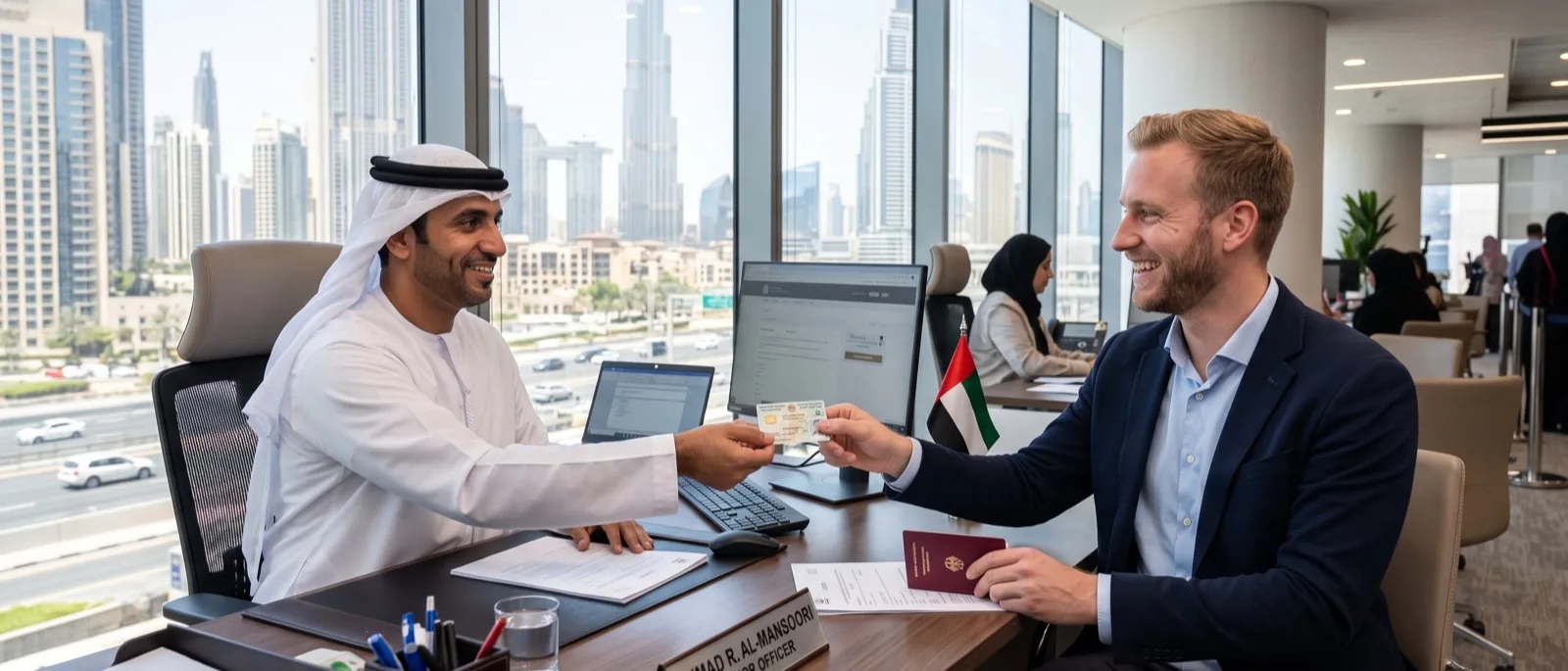
Most of our clients move with their own company. You set up a company in a Freezone or on the mainland, the company sponsors your residence visa, and you receive your Emirates ID. The whole process usually takes around two weeks, of which you only need to be in Dubai for two to three days: entry, medical test and biometrics.
- Company formation: the most common route for entrepreneurs and freelancers. Which licence and which zone fit depends on your activity, see how to start a business in Dubai and Mainland vs Freezone.
- Golden Visa: a ten-year residence permit, for example when you buy property worth at least AED 2 million, see Golden Visa Dubai.
- Employment: if a UAE employer hires you, the employer sponsors your visa.
For the UAE to confirm you as tax resident (the Tax Residency Certificate you may need towards your home country), you generally need to spend 183 days a year in the UAE, or 90 days if you also hold a UAE residence visa and have a permanent home or job there. Personal income is not taxed in the UAE; companies pay 9 % corporate tax on profits above AED 375,000, and qualifying Freezone income can be taxed at 0 %, see taxes in Dubai.

Moving from Ireland?
Book a free 20-minute initial consultation with Clemens Kohlbacher, Senior Consultant, and get an honest assessment of whether and how Dubai fits you.
Book nowPractical steps for the Irish
- Driving licence: an Irish licence can be exchanged for a Dubai licence, see driving licence in Dubai.
- Health insurance is mandatory in Dubai, see health insurance in Dubai.
- Banking: keep one Irish account and tell your bank you are moving; open a UAE account once you have your Emirates ID, see opening a bank account in Dubai.
- Housing and schools: see where to live in Dubai and schools in Dubai.
Checklist
- Plan your days in Ireland for the year you leave and the two years after.
- Review income and gains that could stay taxable while you are ordinarily resident.
- Choose your visa route and set up your UAE company.
- Inform Revenue, your bank and your pension providers; decide on voluntary PRSI.
- Move, complete medical test and biometrics, open your UAE bank account.
Frequently asked questions
Do I pay Irish tax if I move to Dubai?
Once you are non-resident, Irish tax on your Dubai employment or business income generally ends. Because ordinary residence continues for three years, some foreign investment income and gains can stay taxable in Ireland during that time.
How many days can I spend in Ireland after moving to Dubai?
Stay below 183 days in any tax year and below 280 days across two consecutive years. Keep a record of your days, because every day with presence in Ireland at any time counts.
Is there an Irish exit tax?
There is no general exit tax for individuals. The points to plan are ordinary residence, capital gains tax and Capital Acquisitions Tax.
Is there a tax treaty between Ireland and the UAE?
Yes. The double taxation agreement decides your residence if both countries could claim you and can limit Irish tax on some income.
Summary
For the Irish, moving to Dubai means counting days and planning the three years of ordinary residence that follow you after leaving. Keep below the 183 and 280 day limits, review gains and inheritances with an adviser and decide on voluntary PRSI. With your own UAE company, the residence visa takes about two weeks.
For the general process, costs and the pros and cons, see our main guide moving to Dubai. Tax rules change often and depend on your personal situation: treat this guide as an overview and get individual advice before you leave. We are happy to help in a free initial consultation.
Thinking about moving to Dubai?
Get our free Dubai relocation guide now: 7 tips on moving, company formation, visas & more.

You might also like