- Canadian tax residence ends when you sever your residential ties, above all your home, your spouse or partner and your dependants.
- Departure tax treats most of your assets as sold at market value on the day you emigrate, even if you keep them.
- RRSP and Canadian real estate are exempt from the deemed disposition, but withdrawals and rent later face non-resident withholding tax.
- The Canada-UAE tax treaty decides residence if both countries could claim you and can reduce withholding tax.
- The visa route most Canadian entrepreneurs take is their own UAE company, which takes around two weeks.
Why Canadians move to Dubai
Tens of thousands of Canadians live in the UAE, many of them in Dubai. Next to the weather and the safety, taxes are the main reason: combined federal and provincial top rates are above 50 % in several provinces, while Dubai does not tax personal income, dividends or capital gains. There are direct flights from Toronto, and English is spoken everywhere in business.
The time difference of eight to twelve hours to Canada takes some getting used to, and life in Dubai is not cheap, see cost of living in Dubai and the disadvantages of moving to Dubai.
When you stop being a Canadian tax resident
Canada taxes you based on residence, and the Canada Revenue Agency looks at your residential ties. The significant ties are a home in Canada, a spouse or common-law partner in Canada and dependants in Canada. Secondary ties include a Canadian driver's licence, provincial health insurance, bank accounts and credit cards, club memberships and personal property such as a car.
To become non-resident, you should sever the significant ties and as many secondary ties as possible. Selling or renting out your home on a long lease, moving with your family and cancelling provincial health insurance are the usual steps. If you are unsure, you can ask the CRA for an opinion with form NR73.
Watch the 183-day rule: if you spend 183 days or more in Canada in a year, you can be deemed resident for the whole year. The Canada-UAE tax treaty then decides which country you are resident in.
Departure tax: the deemed disposition
On the day you emigrate, Canada treats most of your assets as if you had sold them at fair market value and immediately bought them back. The resulting capital gains are taxed in your final Canadian return. This departure tax applies, for example, to shares, investment funds outside registered plans, crypto assets and shares in your own corporation.
- Exempt from the deemed disposition are, among others, Canadian real estate, RRSPs and RRIFs, most pensions and property of a business you continue to run in Canada.
- Reporting: if the total value of your property is above CAD 25,000, you report it on form T1161; the deemed disposition itself is calculated on form T1243.
- Paying later: you can post security with the CRA and defer payment of the departure tax until you actually sell the assets.
Because the tax arises without any sale, it can create a large bill for entrepreneurs with valuable shares. Planning the timing and the structure before you leave makes the biggest difference.
RRSP, TFSA and income after you leave
- RRSP: can stay invested. Withdrawals as a non-resident are subject to Canadian withholding tax.
- TFSA: can stay open, but new contributions while you are non-resident are penalised at 1 % per month. The UAE does not tax the income, so the account remains tax free in practice.
- Rental income: Canadian rent paid to non-residents is subject to 25 % withholding tax on the gross rent, unless you elect to file a section 216 return and pay tax on the net income.
- Dividends and interest from Canada are subject to withholding tax, which the Canada-UAE tax treaty can reduce.
Your Canada Pension Plan entitlements remain; Old Age Security depends on how many years you lived in Canada. Provincial health coverage ends once you leave, and in Dubai health insurance is mandatory, see health insurance in Dubai.
Your Canadian corporation
A corporation incorporated in Canada remains resident in Canada for tax purposes, no matter where you live. When you emigrate, your shares in it fall under the departure tax, and dividends you receive later are subject to withholding tax. Many clients keep the Canadian corporation for Canadian business and set up a UAE company for everything they do from Dubai.
The route to a UAE residence visa
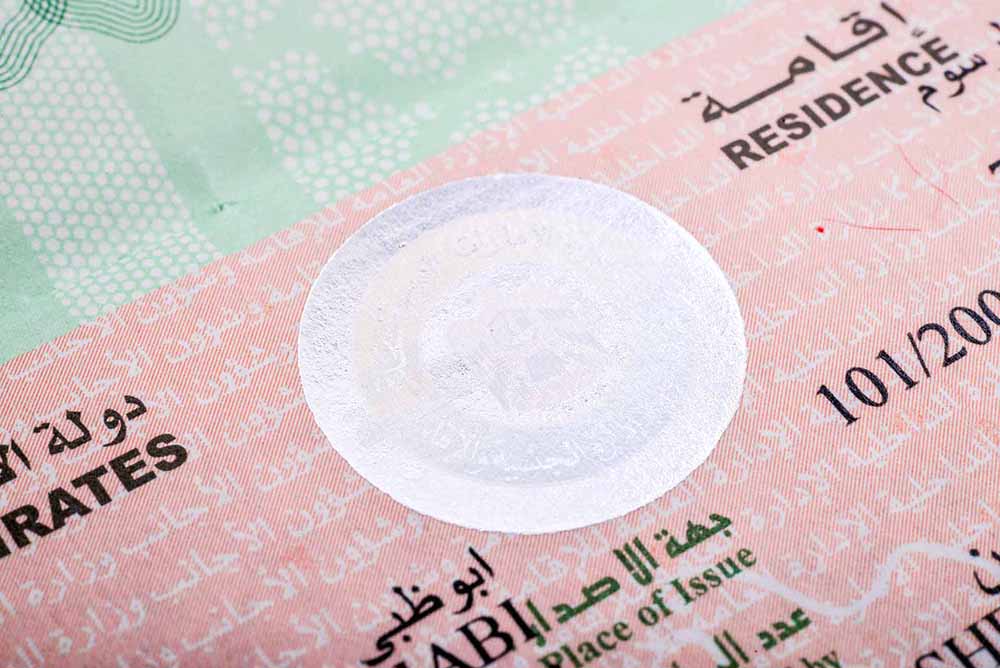
Most of our clients move with their own company. You set up a company in a Freezone or on the mainland, the company sponsors your residence visa, and you receive your Emirates ID. The whole process usually takes around two weeks, of which you only need to be in Dubai for two to three days: entry, medical test and biometrics.
- Company formation: the most common route for entrepreneurs and freelancers. Which licence and which zone fit depends on your activity, see how to start a business in Dubai and Mainland vs Freezone.
- Golden Visa: a ten-year residence permit, for example when you buy property worth at least AED 2 million, see Golden Visa Dubai.
- Employment: if a UAE employer hires you, the employer sponsors your visa.
For the UAE to confirm you as tax resident (the Tax Residency Certificate you may need towards your home country), you generally need to spend 183 days a year in the UAE, or 90 days if you also hold a UAE residence visa and have a permanent home or job there. Personal income is not taxed in the UAE; companies pay 9 % corporate tax on profits above AED 375,000, and qualifying Freezone income can be taxed at 0 %, see taxes in Dubai.

Moving from Canada?
Book a free 20-minute initial consultation with Clemens Kohlbacher, Senior Consultant, and get an honest assessment of whether and how Dubai fits you.
Book nowPractical steps for Canadians
- Driving licence: a Canadian licence can be exchanged for a Dubai licence, see driving licence in Dubai.
- Banking: keep one Canadian account and tell your bank you are becoming non-resident; open a UAE account once you have your Emirates ID, see opening a bank account in Dubai.
- Housing and schools: see where to live in Dubai and schools in Dubai.
Checklist
- Value your assets and estimate the departure tax; decide whether to post security.
- Plan how you will sever your significant residential ties.
- Choose your visa route and set up your UAE company.
- File your final return with forms T1161 and T1243 and inform your bank and provincial health plan.
- Move, complete medical test and biometrics, open your UAE bank account.
Frequently asked questions
Do I pay Canadian tax if I move to Dubai?
Once you have severed your residential ties, you are no longer taxed in Canada on your worldwide income. Canada still taxes Canadian-source income such as rent, dividends and pension withdrawals, usually through withholding tax.
What is the Canadian departure tax?
When you emigrate, most of your assets are treated as sold at market value, and the resulting capital gains are taxed in your final return. Canadian real estate and RRSPs are among the exceptions, and you can defer payment by posting security.
Can I keep my RRSP and TFSA?
Yes. Both can stay invested. You should not contribute to your TFSA while non-resident, and RRSP withdrawals face withholding tax.
Is there a tax treaty between Canada and the UAE?
Yes. The treaty decides your residence if both countries could claim you and can reduce Canadian withholding tax on dividends, interest and some other income.
Summary
For Canadians, the key to moving to Dubai is the departure tax and a clean break of residential ties: value your assets, plan the timing, file forms T1161 and T1243 and keep the 183-day rule in mind. With your own UAE company, the residence visa takes about two weeks.
For the general process, costs and the pros and cons, see our main guide moving to Dubai. Tax rules change often and depend on your personal situation: treat this guide as an overview and get individual advice before you leave. We are happy to help in a free initial consultation.
Thinking about moving to Dubai?
Get our free Dubai relocation guide now: 7 tips on moving, company formation, visas & more.

You might also like